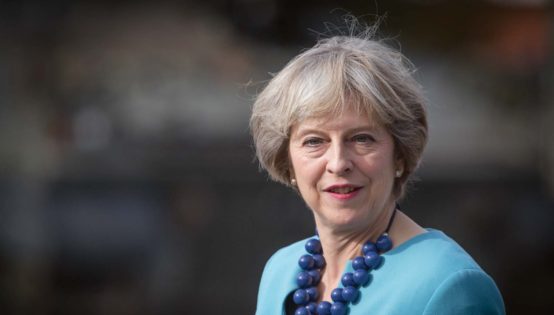
Mrs. May has been involved in politics at all levels for many years, starting out stuffing envelopes at her local Conservative Association before going on to be a councillor in the London Borough of Merton from 1986 to 1994. In May 1997, she was elected as the Member of Parliament for Maidenhead, the constituency in which she lives. She has held various positions in Parliament since.
Appointed Home Secretary in May 2010, Mrs. May made history by becoming the longest-serving Conservative Home Secretary in the past 100 years. During this time, she oversaw reductions in crime, reform of the police, and the introduction of the landmark Modern Slavery Act. In 2005, Mrs. May cofounded Women2Win, an organization dedicated to increasing the number of Conservative women in Parliament and in public life.
Following her election as Leader of the Conservative Party, Mrs. May was appointed Prime Minister in July 2016, where she became the first woman to hold the position since Margaret Thatcher.
As Prime Minister, Mrs. May led negotiations with the European Union after the country’s historic Brexit referendum. She also oversaw the largest ever cash boost to the UK’s National Health Service and the largest expansion of mental health services in a generation. She launched a 25-year Environment Plan and introduced legislation to end the UK’s contribution to global warming entirely. She also established the first ever Race Disparity Audit to shine a light on injustices, and published a Modern Industrial
Strategy to ensure that the jobs of the future are created across the whole country — not just in London.
During her time in Downing Street, the UK’s national debt fell, there were more people in work than ever before, and taxes were cut for 32 million people.
Theresa May often strikes people as cautious, but her political career has been defined by acts of boldness, often on behalf of unfashionable causes, or in the face of seemingly impossible circumstances.
New Yorker